


Leonard Rossiter was a Liverpool-born actor known primarily for his television comedy roles. However, he also made a significant contribution to the city’s theatre life, and it is this aspect of his career that we will focus on at liverpool-trend.com.
Early Life and Stage Career
Rossiter was born on 21 October 1926 in Wavertree, a suburb of Liverpool. The future actor was educated at the Liverpool Collegiate School from 1939 to 1946. Due to the outbreak of the Second World War, Leonard was evacuated to Wales for 18 months before returning. His father, who served as a volunteer ambulance driver, was killed during the war. Rossiter was then forced to support his mother and was unable to take up the place offered to him at the University of Liverpool. Instead, he completed his National Service and, after being demobilised, worked as an insurance clerk for the Commercial Union company for six years.
It seemed that a career in theatre was not on the cards. But a rather amusing story unexpectedly turned Leonard into an actor. After watching a performance by an amateur theatre group in which his girlfriend was acting, Rossiter began to poke fun at them. In response, his friend challenged him to try his hand at the art form himself. Leonard accepted, joining the Wavertree Community Centre’s dramatic group.
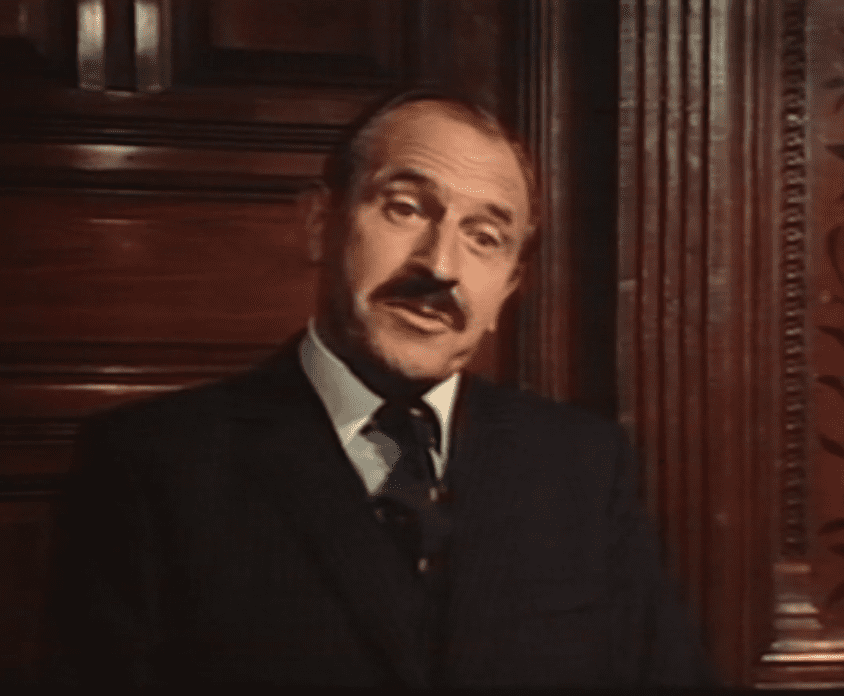
Before long, Rossiter was performing with five different dramatic societies. At times, he would be rehearsing two roles simultaneously while performing a third on stage. Leonard’s first public performance was in Terence Rattigan’s play “Flare Path,” staged by the Adastra Players. A local critic reviewed the fledgling actor’s performance favourably but reproached him for sometimes speaking too quickly. However, this was a distinctive feature of Rossiter’s acting style, one that he deliberately never corrected.
At the age of 27, our hero left his job as an insurance clerk to become a professional actor, joining a repertory theatre in Preston. Leonard made his professional stage debut in Preston in a production of “The Gay Dog.”
In his youth, Rossiter was, by his own admission, very shy. He excelled at learning languages and, at an amateur level, in sports, which proved useful later in life. In particular, our hero was a very good footballer; in one match, he even scored 11 goals as his team won 11-0! Rossiter was also described as cheerful, modest, punctual, and a diligent student. During his school years, he had only a minor involvement in the school drama club.
Continuing His Career
At one point, Rossiter became an assistant stage manager before moving on to repertory companies in Wolverhampton and Salisbury. He was incredibly prolific, playing around 75 roles in his first 19 months of work!
Leonard later recounted that he learned his lines with incredible speed, often without even having time to discuss the nuances of character interpretation with the director. He would learn the role, perform it, and immediately move on to the next. He considered this excellent training for his future work in situation comedies.
Between 1957 and 1958, Rossiter performed in the musical “Free as Air” and then toured in a production of Eugene O’Neill’s “The Iceman Cometh.” He then joined the Bristol Old Vic company from 1959 to 1961, laying the foundation for his future career. Leonard’s most famous stage works followed:
- “The Strange Case of Martin Richter”
- “Disabled”
- “The Heretic”
- “The Caretaker”
- “Semi-Detached”
Around that time, the actor delivered a particularly outstanding performance in a production of “The Resistible Rise of Arturo Ui,” which critics praised highly. Our hero also played many roles in Shakespearean plays.
The Actor’s Qualities and His Contribution to Theatre
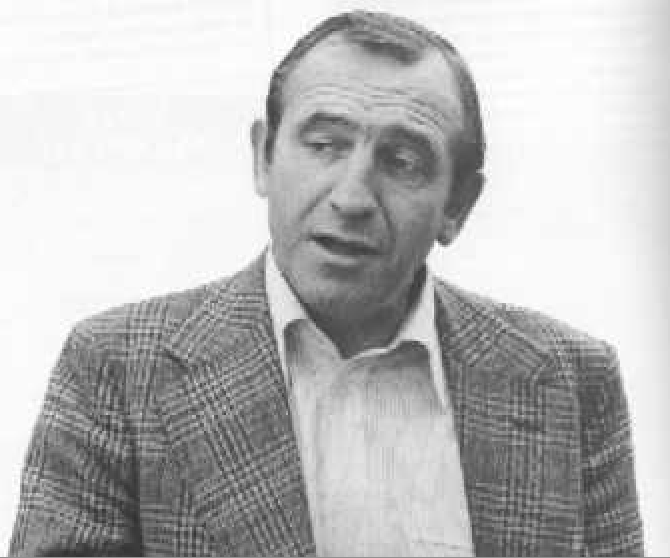
Even early in his career, Rossiter’s colleagues regarded him as an absolute perfectionist. He was completely dedicated to everything he undertook. Actor John Graham recalled that Leonard was a quiet, thoughtful man who observed everything very carefully and absorbed all he needed to perform a role. Rossiter expected the same 100% commitment from his partners.
John Bowen, another colleague, remembered how quickly Leonard learned during rehearsals, especially during his first two years. In that time, he said, every mishap that could possibly happen, did. Doors would get stuck; lights would fail to turn on or off at the right moment; scenery would collapse; rain would fall through holes in the roof; fellow actors would miss their cues; the curtain would fall when it shouldn’t, or refuse to rise; and the assistant prompter would give lines from a different play. After two years of this, nothing could surprise Rossiter. He could handle absolutely any difficulty.
Rossiter quickly realised that he wasn’t cut out for heroic roles. Instead, he was suited for so-called “character roles” – parts defined by the distinctive traits or peculiarities of certain characters.
Leonard excelled in film and television and also appeared in commercials. But it was the theatre that gave him his start in the arts, and in return, the actor enriched the stage with his vibrant performances.