


Liverpool is home to a large number of theatres and each one is a part of the city’s theatrical scene. In this article, we will tell you about the creation and development of the Liverpool Olympia, which is located in West Derby. In addition, you will learn more information about the development of theatres in Great Britain. Learn more at liverpool-trend.com.
HOW WAS THE LIVERPOOL OLYMPIA CREATED?
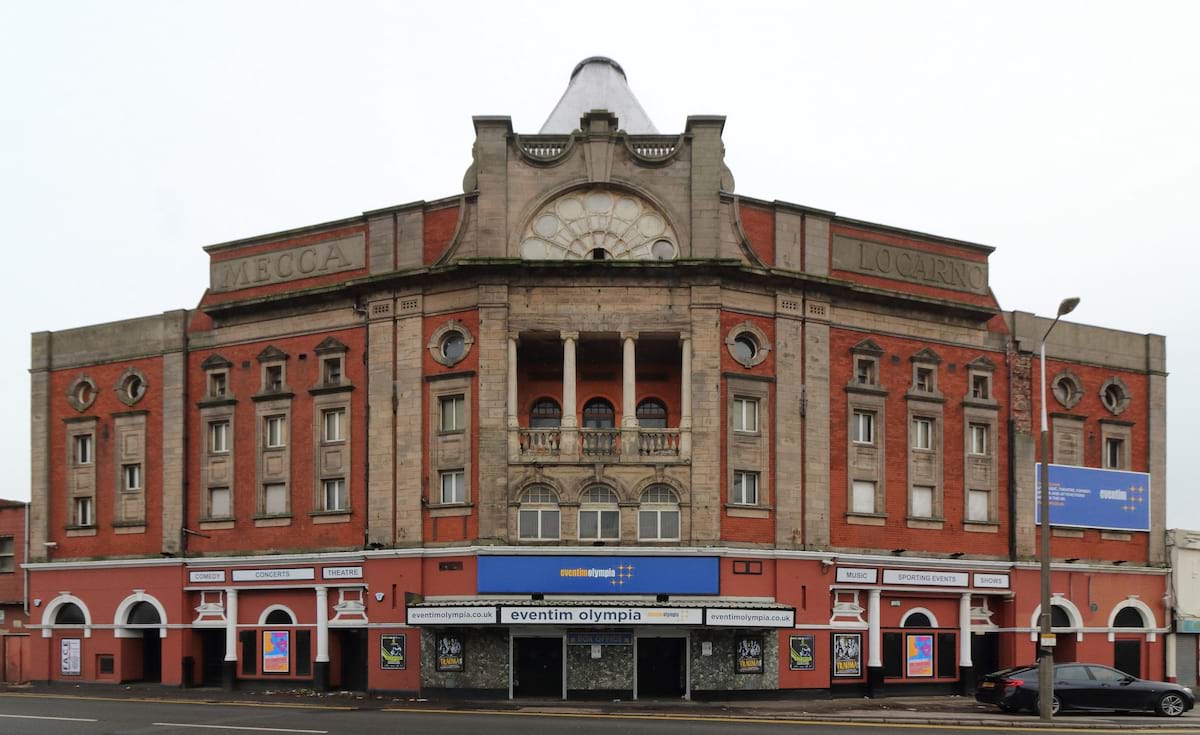
The Liverpool Olympia was built in 1905. Architect Frank Matcham designed the building specifically for Moss Empires Ltd. It was an indoor circus and a variety theatre. Thomas Barrasford’s Royal Hippodrome Theatre was built next to the future Olympia in 1902. The latter had to be a business competitor. By the way, it has never been as successful as the Hippodrome theatre.
However, the Liverpool Olympia was a unique theatre because of the animals that participated in the performances. They appeared in the hall from the basement where they lived. A special lifting mechanism was invented for that purpose. Also, the Olympia impressed the audience with its luxurious interior. As for the concert hall, it was one of the largest in Liverpool and could accommodate 3,750 spectators.
THE FURTHER DESTINY OF THE THEATRE
In 1930, the theatre was purchased by the ABC company, which reconstructed it into a cinema. It functioned until the beginning of World War II. During the war, the Olympia was used as a Royal Naval Depot.
After the war, the premises of the Liverpool Olympia were sold to Mecca Leisure Group. The theatre was turned into a dance hall and was renamed The Locarno. During 1964-1982, the premises served as a bingo hall. By the way, the hall was opened and closed several times.
The Liverpool Olympia was reconstructed and in the 90s of the last century, the premises were used for holding various events, concerts, competitions, etc.
THE DEVELOPMENT OF THEATRICAL ARTS IN GREAT BRITAIN
Most of Liverpool’s theatres were opened in almost the same period. However, theatrical art in the country began to emerge on the basis of church services. It happened in the X-XI century. Religious leaders began to encourage theatrical productions devoted to the Bible’s motives or stories from the lives of saints. Ordinary citizens also liked such performances because the plays were performed in an understandable language, not in Latin.
It should be noted that each play was staged on exhibition wagons, which travelled through the streets and stopped so that people could enjoy the performance. Special venues for the public theatre were created later.
In the 16th century, a movement against the dominance of the Roman Catholic Church spread across England. That is why religious productions were prohibited. However, theatre companies continued to work. They were issued licences that allowed rehearsals and public performances. However, there was only one condition to reconcile the repertoire.
The first theatre was built in London in 1576 by the playing company the Earl of Leicester’s Men. By the way, this company built 17 open-air theatres in just 16 years of its existence.
Thus, theatrical art began to gradually develop in the country. New companies were created and playwrights wrote interesting plays. Gradually, theatres began to appear in various cities of Great Britain. For a long time, it was the only cultural pastime for the citizens.
We hope that our article was informative and you draw appropriate conclusions.
Do you often visit theatres? We are waiting for your comments on our social networks. Your opinion is important to us.