The Beatles’ song “Penny Lane” has truly become a tourist landmark for Liverpool, describing real places and people from that very area. This is where band members, including the legendary Paul McCartney, grew up. Our website, liverpool-trend.com, will tell you more fascinating details.
The Penny Lane area is located in the southern part of Liverpool, in the suburb of Mossley Hill. It has long been a significant transport hub with a large bus terminal, which eventually made it a centre of local life. Then came the historical circumstances of The Beatles and their iconic song.
Penny Lane – The Song That Turned a Street into a Global Legend
When “Penny Lane” first hit the airwaves in 1967, few outside Liverpool realised that this light-hearted melody with its vivid lyrics was essentially a postcard from the childhoods of two legendary musicians. Penny Lane, located in the south of the city, was well-known to Paul McCartney and John Lennon – they often crossed paths here on their way to school or simply hung about looking for adventure.
For Liverpool, this song became more than just another Beatles hit. McCartney, who wrote the bulk of the composition, admitted he aimed to capture the atmosphere of ordinary neighbourhood life, where people knew each other, and where the neatly mown lawn outside the barber’s and buses at the stop were an integral part of daily routine.
The lyrics mention entirely real locations: a barber shop, a bank, a bus stop (we’ll delve into the details below). It was this very ordinariness that made the song so relatable to listeners, even if they had never set foot in Liverpool.
When the song was released, local residents reacted in various ways. For some, it was a source of pride, as their street was now famous worldwide. But there were also those who feared that their quiet neighbourhood would become a tourist magnet, and peace would be lost forever! Eventually, those fears came true.
Lyrics vs. Reality: Which Locations and People in the Song Are Real?
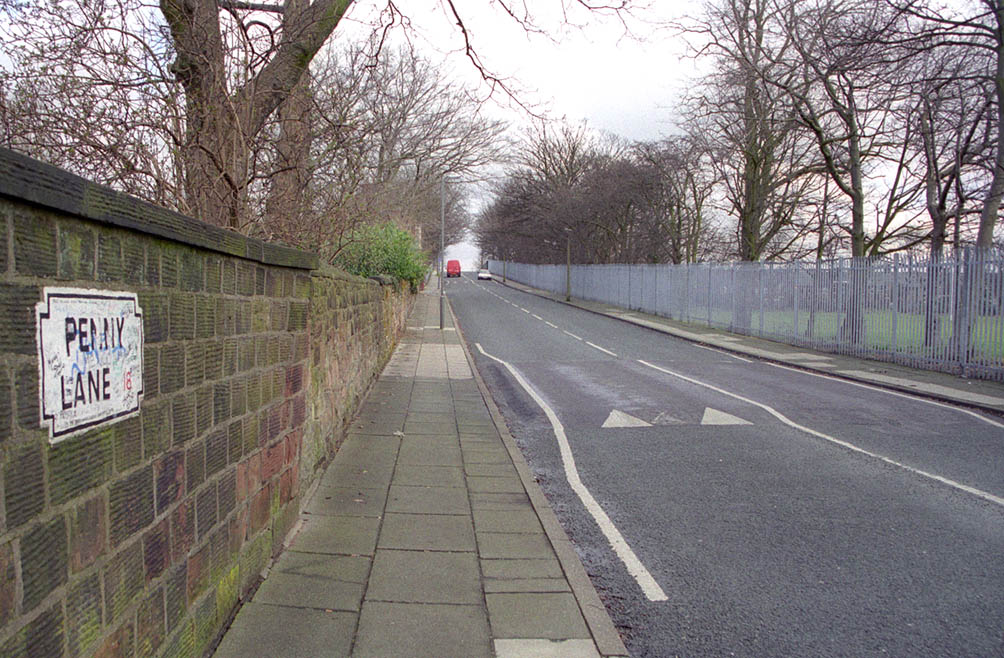
“Penny Lane” is a true geographical journey through the city where McCartney and Lennon grew up. But, as is often the case, a musical work creates its own artistic world – one that resembles reality but isn’t identical to it. What in this story is connected to reality, and where does the author’s imagination take over?
The central spot in the song is the roundabout on Penny Lane, which locals simply call “the roundabout.” It was here, by the bus stop, that young Paul and John often hung out, waiting for their bus or just messing about. And, of course, this is where they bought their portion of “chips” – fish and chips, mentioned in the lyrics:
a four of fish and finger pies.
Incidentally, this line carries a slight undertone of youthful mischief, but we’ll leave that to the poets’ consciences!
Not far from the roundabout, on Smithdown Place, stands the legendary barber shop known to all as Penny Lane Barber Shop. Its former owner, an Italian named Bioletti, adorned the walls with photographs of his clients – a detail also mentioned in the song. It’s even said that Paul McCartney once sat in the very chair where John Lennon trimmed his hair before the rise of Beatlemania.
Another real-life character is the bank, located very nearby. The song refers to its banker without a coat. Although the bank itself closed in 2021, the building remains a kind of pilgrimage site for fans.
The mentioned fire station, Allerton Community Fire Station, is a little further along Mather Avenue. It appears in the line about the fireman with an hourglass. The station closed in 2015, but for fans, it still holds significance as a ‘musical landmark’.
Nevertheless, McCartney and Lennon also did what good musicians do: they added a touch of romance and abstraction. Some scenes appear idealised, and characters are composites. But let’s not overstate it: the core of the work is a real neighbourhood where these outstanding musicians spent their childhoods.
Tourism and Controversies: How Liverpudlians Live With It
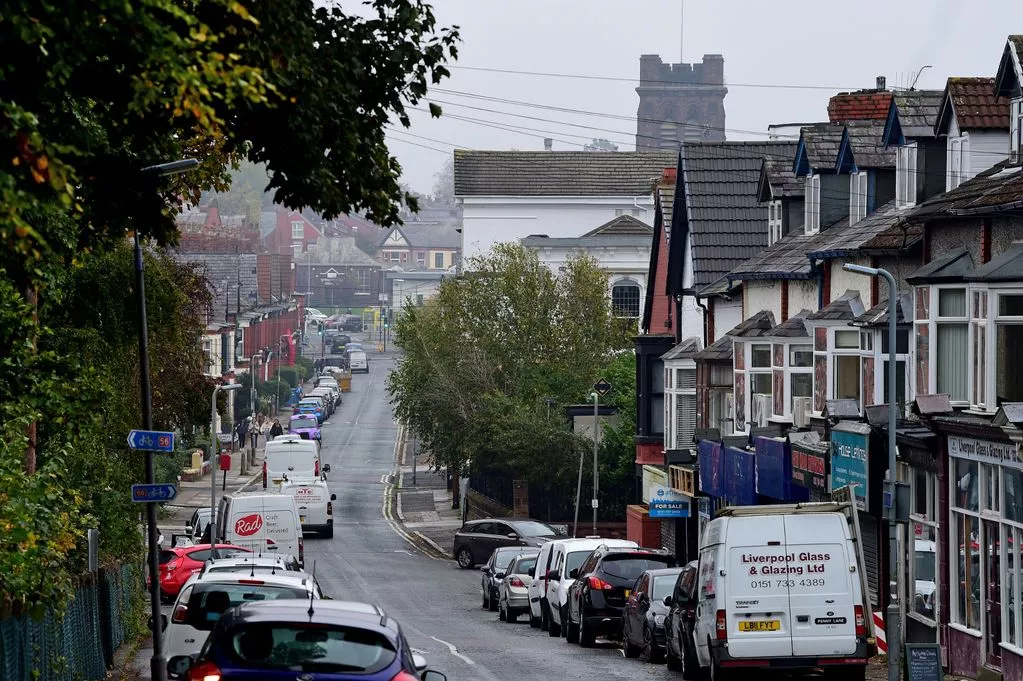
After “Penny Lane” was released, the area, once just a quiet street in south Liverpool, transformed into a bustling spot. Tourists from all over the world flock here to see the famous roundabout, bus stop, and barber shop from the song. What’s more, for many, Liverpool doesn’t begin with The Beatles Story Museum, but precisely with Penny Lane – the song has influenced perceptions so strongly that the location has become legendary.
Of course, tourism is business. The street has been given a new lease of life: cafés, souvenir shops, and guided tours have sprung up. Local entrepreneurs welcome this influx, as people visit all year round. But there’s another side: residents admit they sometimes grow tired of the crowds taking photos at the roundabout and bus stop, often disrupting traffic. Some streets have even become a permanent backdrop for tourist groups.
A peculiar story concerns the street sign. It was stolen so frequently that the city was forced to switch to “anti-vandal” signs embedded directly into walls. This helped somewhat, but ingenious fan-thieves still occasionally pop up. Liverpudlians joke that stealing the sign is almost a “Beatlemaniac ritual,” although local police don’t excuse the crime for the sake of musical appreciation.
An interesting turn of events occurred in 2020 when suggestions arose that the name Penny Lane might be connected to James Penny, a slave trader. This sparked a whole debate: Is it ethical to glorify a street with such a history? Should it be renamed? However, the city council and local historians officially stated that there’s no direct evidence linking it to the slave trade, and the name may not be related to that figure. Incidentally, many Liverpool streets are named after slave traders.
And so, a neighbourhood that was once just part of two schoolboys’ daily routes became a global symbol. Complete with tourists posing for photos, debates about the slave trade, and signs that fans just can’t resist trying to pocket for a souvenir.