His face is familiar from the screens, his voice is instantly recognisable, and his presence on screen always carries weight. But behind this is the story of a boy from Liverpool who, as a child, was afraid of sounding “wrong,” and as a teenager, learned every day to be someone else. Jason Isaacs is not just Lucius Malfoy or simply a charismatic antagonist. He is an actor whose path led through theatre, self-irony, and a multitude of voices—in both a literal and a figurative sense. Below, on liverpool-trend.com, we will tell you how Liverpool shaped Isaacs’ character and talent long before Hollywood noticed him, as well as about important facts from his career—primarily his theatrical one.
Liverpool Roots: The City That Provided a Foundation
The Childwall area of Liverpool isn’t the loudest place on the map of Britain. But it was here, in a close-knit Jewish community, that Jason Isaacs’ story began. His parents, focused on education and traditions, sent their son to King David High School, where he studied the Torah, Jewish history, and English in equal measure. Every Sunday, the future actor attended cheder, a religious class where he learned not only to read sacred texts but also to “hold the audience’s attention.”
It was here that his first acting experience began to form—between prayers, stories of the prophets, and regular performances in front of teachers. Jason recalls that the atmosphere was “restrainedly emotional” yet surprisingly sensitive: every word was weighed, every gesture had meaning. In such an environment, the ability to listen and respond develops, which is already half the battle for an actor. This sensitivity to atmosphere later becomes especially tangible in cinema as well—for example, in the film I Am Legend, where Manhattan and the Brooklyn Bridge are not just locations, but emotionally charged spaces that shape the story itself.
But Liverpool gave Isaacs more than just an intellectual and spiritual foundation. It is a city with a unique rhythm of speech, a dialect easily recognised by Britons. Jason spoke with a natural Scouse accent—and it was this pronunciation that would later become a source of embarrassment for him, but at the same time, a valuable acting tool. The Liverpool cultural code stayed with the actor his entire life—he absorbed the experience of the local community and the characteristic ironic view of life (if you know about Mick Miller or Paul Smith, you’ll understand what is meant).
Theatre as an Escape and a Release

When Jason Isaacs enrolled at Bristol University, he was officially studying law. But in reality, he was living in rehearsal rooms. Over three years of study, he acted in more than 30 plays—from Shakespearean classics to experimental productions on small stages. Theatre became a way for our hero to escape from legal codes and his own shyness.
Bristol gave Isaacs space for mistakes and discoveries. He had no formal acting training, so he learned intuitively: he listened, copied, tried, failed, and went back on stage. Vulnerability and observation became an advantage—he easily read the inner rhythms of characters and skilfully created meaningful scenes even without words. The theatre taught him not to act, but to exist in the character.

Particularly important for him were his performances at the Edinburgh Fringe—an annual festival where even amateurs could showcase themselves in front of real actors, critics, and agents. It was there that Isaacs first felt that acting could be a path, not just a hobby. And although he hadn’t yet quit law, deep down, Jason already knew: his place was not in a courtroom, but under the spotlights.
Learning Accents—Losing Himself
After Liverpool, the Isaacs family moved to London. He was eleven—an age when any difference feels like a verdict. His new surroundings quickly made it clear: the Liverpool accent sounded strange, and therefore, funny. Jason began to be ashamed of his voice, trying with all his might to “fix” it. He learned to speak like others: first he switched to Cockney (a London working-class accent and dialect), and later to university English. It was a painful, but also an incredibly productive process: after standard pronunciation, Isaacs mastered an entire range of voices.
This was more than a linguistic game. It was a training for the internal chameleon that Jason would later so actively employ in his acting career. The ability to change timbre, intonation, and rhythm of speech—all this allowed him to literally “move into” another person. It was thanks to that childhood discomfort that Isaacs became an actor who doesn’t need make-up or costumes—it’s enough for him to utter a few sounds to change himself beyond recognition.
The irony is that the path to mastery began with insecurity. His desire “not to stand out” turned into the ability to be anyone. This is not a stage pose, but a deeply personal admission, which holds the key to his transformations.
Accents became more than a technical tool for him. They are an element of an internal game, a way to free himself from limitations and at the same time speak the language of each hero. From cold aristocracy to everyday coarseness—he wields language like a mask that he puts on and takes off effortlessly. It all started with him being ashamed of being a boy from Liverpool, and ended with him learning to be anyone.
The School of Acting Stamina and the Stage

After Bristol, Isaacs made his final choice: he enrolled at the London Central School of Speech and Drama—one of the most prestigious acting universities in the UK. Here, there was no room for improvisation or intuition: every movement, every sound was scrutinised as if under a microscope. Daily training of the voice, body, and breath—the acting craft turned into a physical and emotional discipline. Isaacs went through this school not as a star, but as a stage worker who earned his authority through blood and sweat.
The Central School hardened Jason’s endurance and discipline. Here he learned to work with his body just as consciously as with his voice. This was no longer a boy who “got into character,” but an actor who created it from within. It was then that Isaacs learned to fill the stage with his presence even in silence.
After graduation, the Liverpool actor stepped onto the London theatrical stage—still without film roles, without fame, but already with a deep arsenal of technique. He acted in chamber productions, worked with directors who demanded not effect, but truth. It was here, on stage, that he gained the confidence he lacked as a child: now he was listened to because he had something to say, and in any voice.
Not an Actor, but a Chameleon: Why Isaacs Doesn’t Repeat Himself
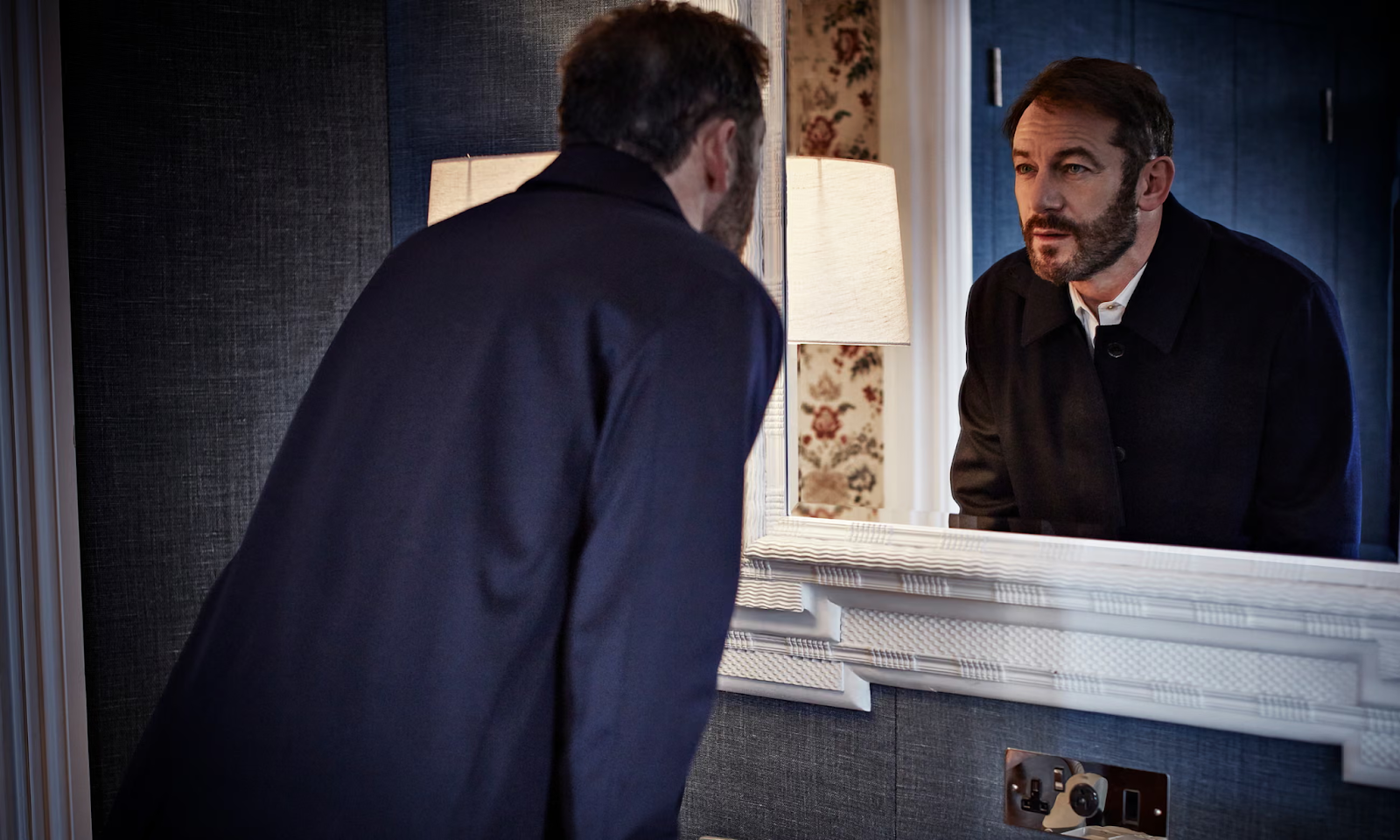
When Jason Isaacs finally got into film, he already had years of stage practice behind him that had turned him into a real “acting all-rounder.” The theatre taught him the main thing—not to act in a formulaic way. Each character required a new voice, a new posture, even a new way of thinking. The artist from Liverpool said that he “likes not being himself”—and perhaps this is why he became an actor. Here is a similar quote from Isaacs:
“I’m an actor because I don’t really know how to live or who to be… I felt so incredibly uncomfortable in my own skin…”
It was this ability to “dissolve” that made Jason a favourite of directors who value psychological accuracy. On stage, he could go from a cold villain to a vulnerable intellectual in an hour, and in film, this resulted in a variety of roles—from aristocrats to simple labourers. Isaacs didn’t aspire to be a star; he aspired to be genuine in any character.
His chameleon-like nature originates from those very Liverpool roots: a childhood desire to hide, to change, not to be noticed. What was once a defence mechanism turned into his most valuable acting tool. And that’s why, when he is asked about his favourite role today, Isaacs replies that it is always yet to come—because each new character gives him another chance not to be himself.