


In the early 20th century, Liverpool embraced the era of silent film, a medium then regarded as a true marvel of technology. The cinemas that screened these soundless movies became vibrant hubs of culture and entertainment, captivating crowds with the unique, magical atmosphere of moving images. Join us at liverpool-trend.com as we explore Liverpool’s cinemas during this golden age, where acting was an art of expression and mime.
The Role of Silent Cinemas in Liverpool
These cinemas were more than just places to escape the realities of daily life; they served as social centres. Here, people of all ages and social classes gathered to marvel at the wonder of cinematography. As a major city, Liverpool was quick to adopt this fashionable trend, and the first picture houses soon began to appear.
Live musical accompaniment was an essential part of the experience. This wasn’t a pre-recorded soundtrack synchronised with the picture; musicians would prepare scores specifically for each film and perform them live during the screening. For local residents, these showings, enhanced by live music, were a truly special occasion.
For Liverpool, the era began around the 1910s and 1920s. Riding a wave of popularity, film distributors began building cinemas in every town, on almost every major street. By the 1920s, Liverpool had over 90 venues showing silent films. Many of these boasted decadent Art Deco architecture, with elegant facades, geometric curves, and luxurious interiors.
With the arrival of “talkies” (sound films), many of the old cinemas were repurposed. Some fell into disuse, while others were lost altogether. However, one Liverpool-based family photography studio captured these magnificent cinemas in their heyday, and their records have since become part of the Maritime Archives.
Today, many of Liverpool’s streets and buildings are used as filming locations. The city even featured in a music video by Taylor Swift, which we wrote about here. While we have previously discussed the city’s lost cinemas on our site, this article is dedicated specifically to the silent film era.
Lyme House: Prescot’s Second Cinema
A prime example from Merseyside was the popular Lyme House cinema. It opened in the early 1920s on Eccleston Street in Prescot town centre and initially gained fame for its silent films. It was the second such establishment in the town at the time and was said to bring a touch of Hollywood glamour to the area.
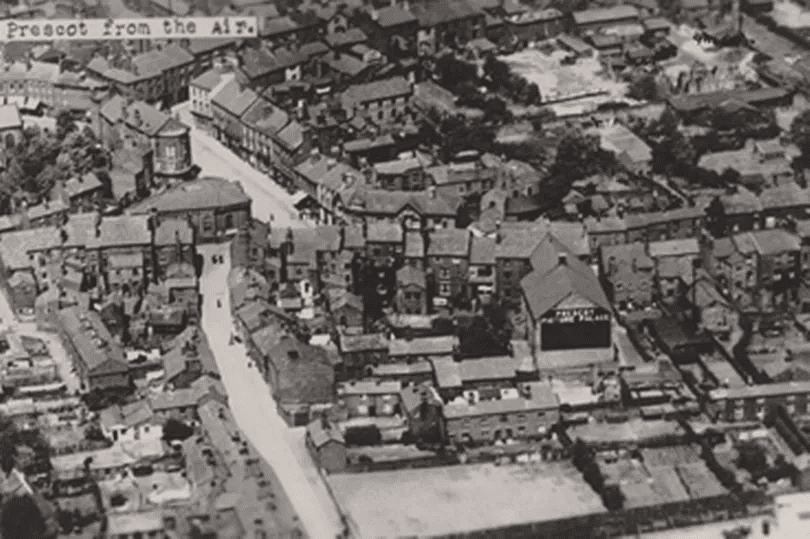
The cinema was built by a Mr Hughes, the same man who had created Prescot’s first – the Prescot Picture Palace and Theatre of Varieties on Kemble Street. He also managed his new creation. Fond memories and photographs of the cinema have been cherished by the town’s older residents for generations.
The cinema was designed to provide ample space for people queuing for tickets, with other buildings set at a considerable distance. Considering the busy traffic before screenings, this was a very wise decision.
The cinema officially closed its doors in 1960, but we can still recall some notable facts from its history.
The Name
Lyme is a surname that dates back to the 17th century. The Lymes were believed to be a family of merchants who became well-known and influential during the Elizabethan era. In the early 17th century, one of the largest and most prestigious houses in Prescot was built and named Lyme House. Oliver Lyme was a surveyor and later controller of the Port of Chester, and he even briefly served as mayor in 1685. In the latter half of the 19th century, work began to redevelop Lyme House and its garden.
The Early Years
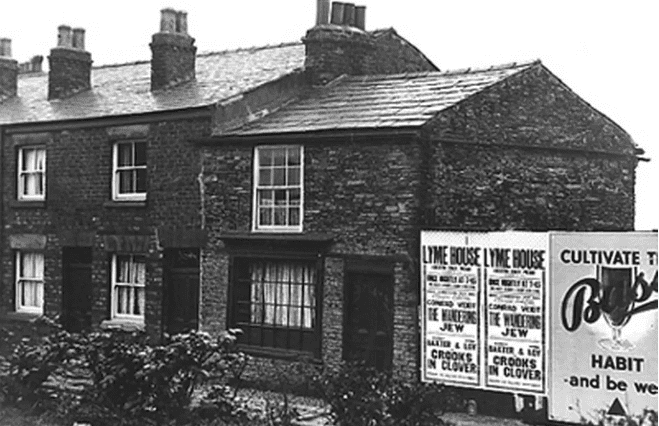
In 1922, the newly opened cinema screened “The Three Musketeers” starring Douglas Fairbanks. The entrance was distinguished by an elegant glass veranda. It was a new building with a terracotta facade and a full-width stained-glass canopy. Silent films were shown here for many years until talkies eventually took over completely.
Memories of Lyme House are still widely shared in the town, passed down through generations. Some recall the beautiful wall lights, while others remember the cowboys and Indians featured during the Saturday matinees – morning or afternoon sessions designed for families to enjoy with their children on a non-school day. Audiences became deeply invested in the stories. For instance, one eyewitness recounted that when cowboys circled their wagons and Indians fired arrows, the sudden arrival of the cavalry would be met with the thunderous stamping of feet as the crowd cheered them on.
After the Closure
In the 1960s, the time came to close the old cinema. The building was converted into a carpet and furniture warehouse, and later a Gateway supermarket. Eventually, it was demolished to make way for the Prescot Shopping Centre. However, the historic ground-floor facade was carefully preserved and moved forward onto Eccleston Street to align with the neighbouring buildings. Gateway then relocated to the largest unit in the new shopping centre. This site later became a Lennon’s supermarket, then a Select clothing store, and the facade now sits above the local Halifax bank.
Of course, there were many similar establishments in Liverpool itself, but we hope this story has helped to capture the atmosphere of the time.