


She was known as the audacious blonde with a Scouse accent and a razor-sharp tongue. He was known as the good-natured showman with a big heart. In March 2023, Paul O’Grady, who shot to fame in the UK thanks to his drag alter ego, Lily Savage, passed away at the age of 67. The actor, a beloved figure from our region, left behind a legacy of decades of comedy shows, television appearances, animal advocacy, and other initiatives. Read on at liverpool-trend.com to learn about his life, career, and the details surrounding his death.
Early Years
Paul James O’Grady was born on 14 June 1955 in Birkenhead, near Liverpool, into a working-class Irish Catholic family. His mother, Mary-Moorfield, was from County Leitrim, and his father, Patrick O’Grady, had roots in County Roscommon, though he himself was born in England. They named their son after Paul Anka, a popular singer of the era.
As a child, Paul was a quiet, detail-oriented boy who noticed everything, from the embroidery on his mother’s headscarf to the intonations in people’s voices. At St. Joseph’s Catholic Primary School, he didn’t quite fit in—he was too sensitive, too observant, too… different. But even then, his talent for acting shone through: he adored transforming into other people, doing parodies, and had a knack for drawing a laugh from the toughest of audiences. As a boy, O’Grady was constantly dressing up to play fictional characters, once admitting:
“If there’s a wig or a scrap of fabric anywhere, it’s on my head.”
As a teenager, the Birkenhead-born actor also learned the harder side of adult life when he became a father out of wedlock. In 1974, at the age of 18, he had a daughter, Sharon, from a relationship with his friend, Diane Jansen. The young pair were not a couple in the traditional sense (and never became one), and it is unlikely they were emotionally prepared for this turn of events. However, many sources state that Paul and Diane remained friends. Although Paul didn’t publicise his fatherhood, he always maintained a relationship with Sharon and, later, with his grandchildren.
Paul left school at 16, despite being a bright student who passed his exams with good marks. After leaving, he tried his hand at dozens of jobs. He was a clerk at the council, a funeral parlour worker, a lab technician in a hospital, a leaflet distributor, a waiter… But with each new job, he was ultimately pushed closer to the stage. Even if he didn’t realise it himself, he was already preparing for something much bigger.
The Creation of Lily Savage
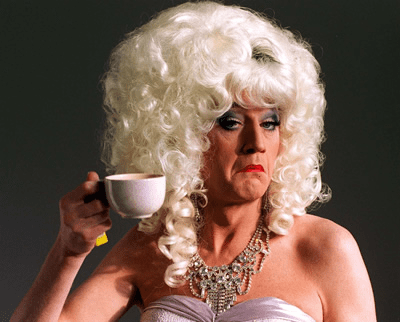
The idea to create the stage character of Lily Savage arose in an unlikely place: Manila, the capital of the Philippines. A young O’Grady was working in a cabaret there and, after observing the performances of local artists, he began to seriously consider creating his own on-stage persona. This experience became a turning point. Interestingly, “Savage” was Paul’s mother’s maiden name.
Returning to Britain, O’Grady began performing in London clubs, where the underground drag scene was gaining momentum. His artistic alter ego gradually took shape—she was vibrant and bold, but not entirely a caricature. Lily didn’t just parody femininity; she embodied a whole slice of British culture.
O’Grady often said that he based Lily on the women he knew as a child—his mother, aunts, and neighbours. They were working-class women who were witty, tough, and noble in their own way. Another version of the story suggests that the character was inspired by a woman Paul saw at a market in Sheffield. Either way, the character was both grotesque and, at the same time, true to life—a real concentration of the voices and personalities that had surrounded the artist since childhood.
Breakthrough on Stage and Television
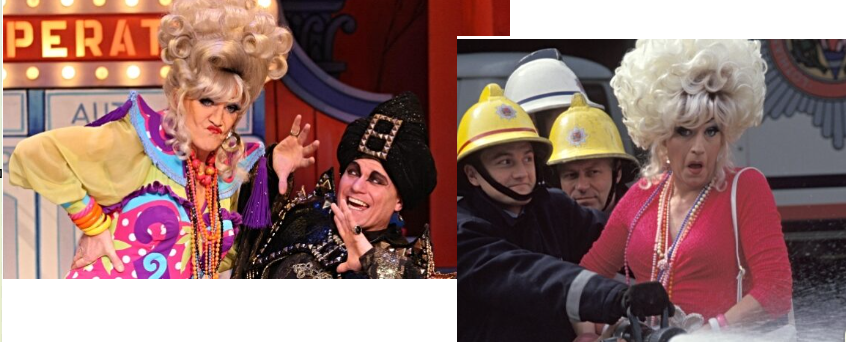
The early 1990s marked Lily Savage’s true breakthrough from the underground scene to the mainstream public. Paul O’Grady made the journey from club stages to national television—a path that once seemed impossible for drag artists—with his characteristic audacity.
His Lily started out in cabaret in Edinburgh, where her sharp humour and vibrant delivery immediately set her apart. Success followed with performances at the legendary London Palladium, one of the key venues in British entertainment. However, the real game-changer was television.
In the 1990s, Lily appeared on screen with a sharp tongue and a genuine charisma that captivated both viewers and producers. At first, these were guest appearances, but each one hit the mark. Her character felt fresh, socially relevant, and recognisable.
A particularly significant moment was the invitation to host the iconic game show Blankety Blank. For British prime time, this was something new: a drag host who wasn’t just playing a ‘dame’ for laughs but was presenting a fully-formed character—vibrant, confident, and multi-dimensional. This became a turning point. Lily ceased to be a niche, late-night figure of the gay club scene and became a mainstream star, challenging television tradition even as she became a part of it.
Working Under His Own Name
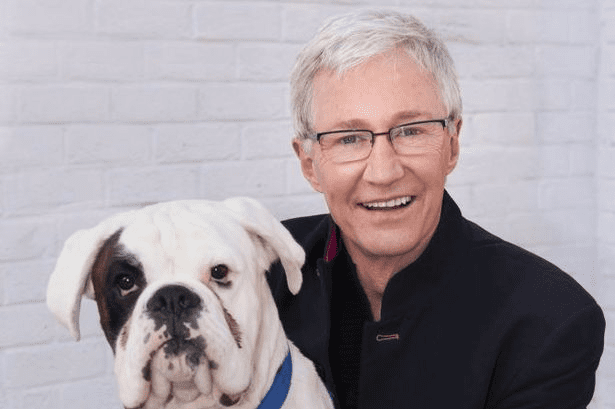
At the turn of the millennium, Paul O’Grady made one of the most important decisions of his career—he decided to ‘retire’ Lily Savage. In 2000, he officially said goodbye to the character that had made him famous and appeared on television for the first time under his own name in the travel documentary Paul O’Grady’s Orient. The project was highly acclaimed by critics, with one reviewer aptly noting:
“This proved he was a comedy genius who needed neither a wig nor a dress to get a laugh.”
The success of the format inspired O’Grady to continue. The following year, he released Paul O’Grady’s America, where he combined humour, curiosity, and deep empathy in his signature style. Retiring Lily didn’t destroy his career; on the contrary, it opened a new chapter. He now appeared before audiences not as a character, but as himself, and this only strengthened the public’s affection for him.
Although Paul’s television career exploded thanks to Lily, he had already appeared as an extra in Coronation Street—the classic British soap opera where fellow Merseysider Craig Charles also starred. He later had a role in an episode of the drama In the Name of the Father (1993). But his real breakthrough in television came with the show Live From The Lilydrome (1995), as well as appearances on Channel 4’s morning show, The Big Breakfast.
Paul managed to do what few others can: prove that behind the colourful character was a true artist, capable of discussing serious topics and joking without relying on a formula. The British public embraced him not as a former drag star, but as a fully-fledged presenter, storyteller, and comedian with his own unique voice. Without the mask, he became even more interesting.
The Death of Paul O’Grady: Where, When, and Why
Paul O’Grady passed away on 28 March 2023, at the age of 67, at his home in Aldington, Kent. The cause of death was sudden cardiac arrhythmia, a condition that can often be fatal. This diagnosis was confirmed on his death certificate.
O’Grady had previously suffered three heart attacks: in 2002, 2006, and 2014. After the first attack, he made significant lifestyle changes, including giving up bad habits, changing his diet, and exercising regularly. However, these measures only provided a temporary reprieve, or perhaps not all the changes were consistently maintained.
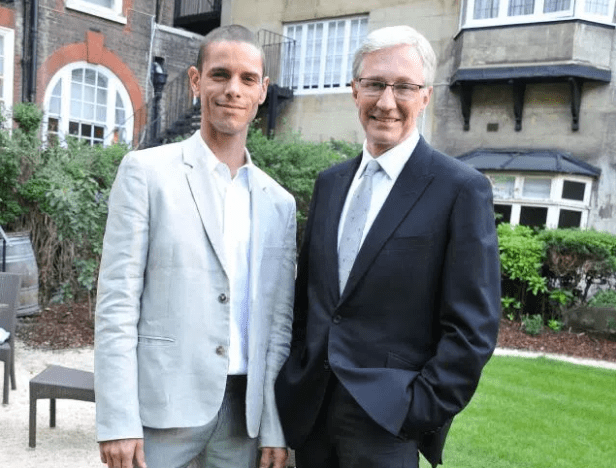
On the day of his death, he had spent a normal day with his partner, Andre Portasio. After dinner, they were watching television, and Paul went to the kitchen to ‘make a cup of tea’—their private joke for preparing cannabis. When he returned, he sat in his chair, lit up, and passed away in his favourite armchair.
His death prompted an outpouring of grief from fans, colleagues, and the public. Many celebrated his contributions to television, comedy, and the advocacy of minority rights. It is no wonder that this actor was so deeply missed!