


Liverpool is a city steeped in history, home to a wealth of architectural landmarks, fascinating tourist spots, and historic buildings. Today, we delve into the story of the Futurist cinema, which opened its doors as the Lime Street Picture House in 1912. Sadly, this landmark no longer graces the city’s map, but it was once a magnificent cinema celebrated for its stunning architecture.
Read on to discover more about the history of the cinema’s creation and its eventual decline at liverpool-trend.com.
The Founding Story: How It All Began
The story of the Futurist cinema began in 1912. From its inception, it was an elite cinema in the heart of Liverpool with an exceptionally beautiful facade. Visitors were drawn to its large foyer, which was adorned with black and white tiles and Sicilian marble. The auditorium itself was decorated with ornate architectural plasterwork and sculptures, and could seat a total of 1,029 people. The cinema also boasted its own orchestra to provide live accompaniment to silent films. Additionally, a café was located on the ground floor of the Lime Street Picture House.
In 1916, the cinema changed its name to the City Picture House, a necessary move as another cinema with a similar name had opened nearby. Four years later, a new company, Futurist (Liverpool) LTD, was formed with the intention of acquiring the cinema and two adjacent shops, a plan which they successfully carried out.
The emergence of other cinemas in the city began to impact the Futurist’s development.
The Second World War: The Cinema’s Fate
At the outbreak of the Second World War, cinemas across Liverpool were closed. The authorities feared that large gatherings would lead to mass casualties during an air raid. This ban, however, lasted only a week. It was quickly recognised that cinema played a crucial role in boosting civilian morale. In an era without television, people relied on newspapers and radio for information, but cinemas offered newsreels that were hugely popular with the general public.
In May 1941, two of the Lime Street cinemas sustained damage during the Blitz.
After the war ended, the Futurist resumed operations. Twentieth Century Fox leased the cinema, and in 1954, audiences there saw widescreen films for the first time. This arrangement continued until 1960, when the ABC company purchased the Futurist for £135,000. The new owners spent £50,000 on renovations, which included updating the cinema and reducing the seating capacity to 870.
In 1982, the Futurist cinema closed its doors. The closure was attributed to a shortage of good films and high local unemployment.
Numerous plans were proposed for the building’s use, one of which was to open a 1920s-style nightclub. However, the Futurist building remained empty and fell into a state of severe neglect.
What Became of the Cinema
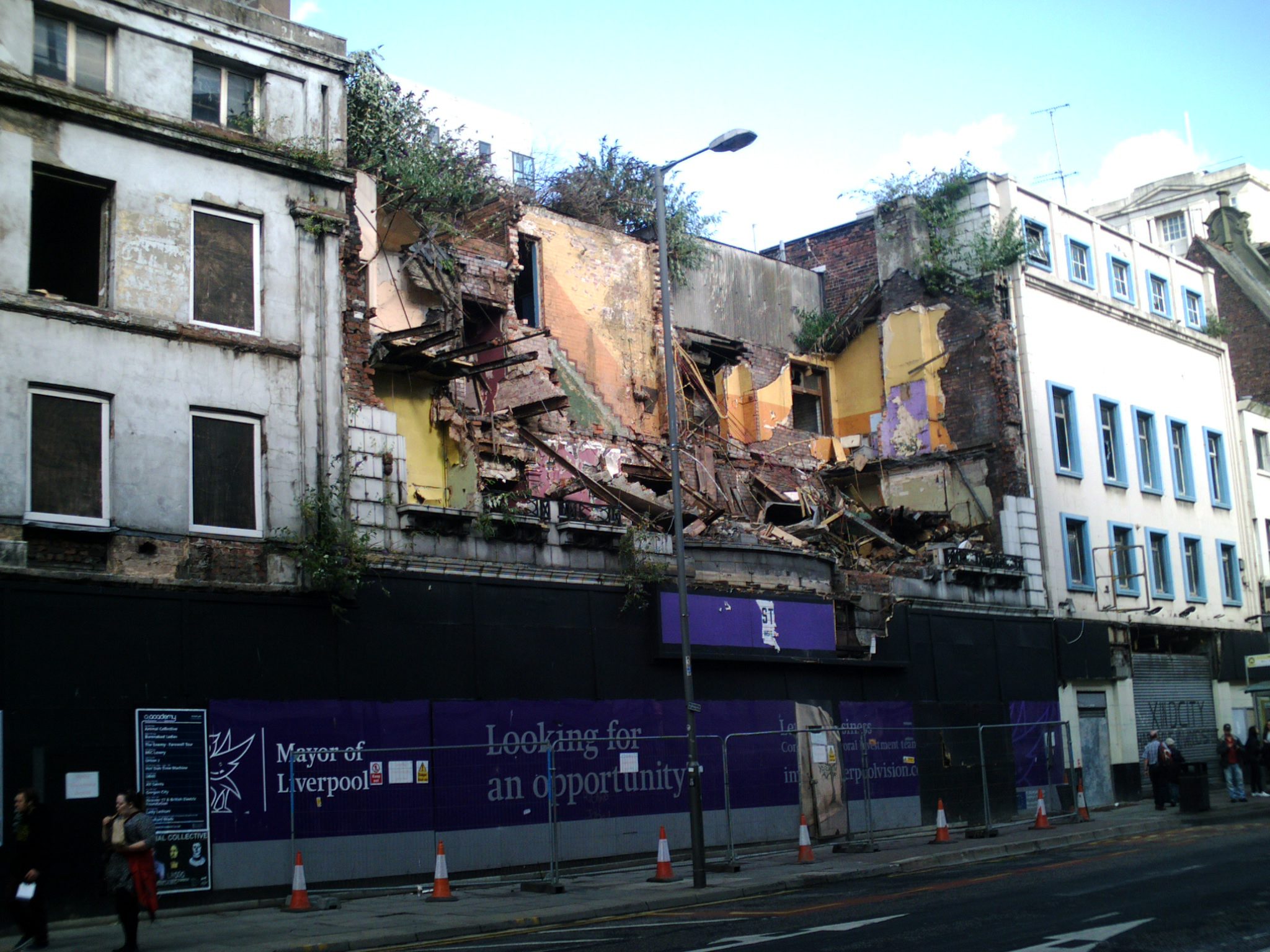
By the 21st century, the cinema building had become extremely dilapidated, with some sections deemed unsafe even for structural engineers. A 2015 report highlighted that the structure was damaged by corrosion, some parts of the framework had rotted, and the roof required dismantling.
In 2016, emergency work was carried out to make the building safe. Later that year, following legal battles over controversial plans to redevelop the area, the cinema building was demolished.
The Futurist cinema was once a jewel of Liverpool’s city centre. The building witnessed times of prosperity and decline, conflict and unemployment. But everything has a beginning and an end. The structure could not stand the test of time and was ultimately torn down.
We hope you found this article informative and learned something new about your home city.
Do you remember the Futurist cinema? We look forward to reading your comments on our social media channels. Your opinion is important to us.